
What does class T64 mean in Paralympic athletics?
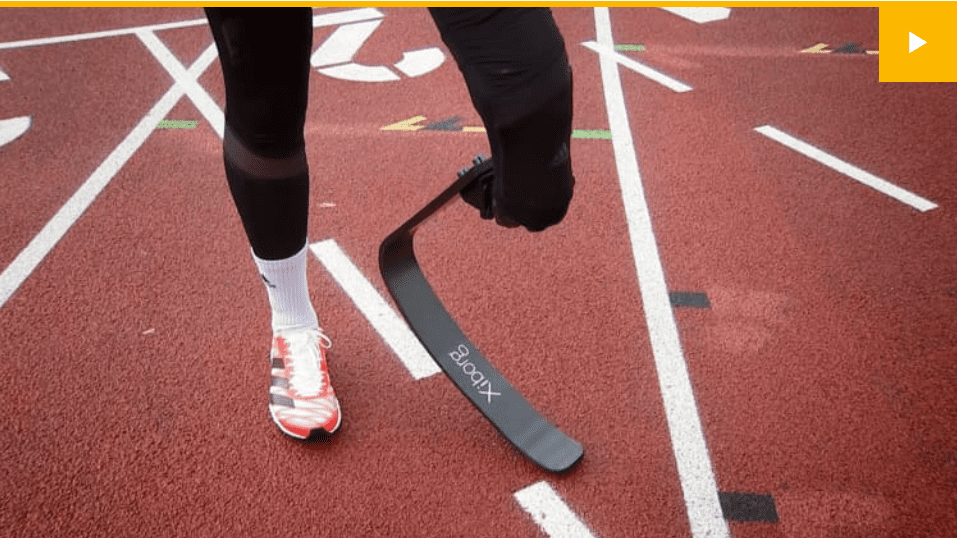
Short answer: T64 is the sport class for athletes who run on the track with a prosthesis after a below-knee amputation of one leg, or with a significant leg length difference. The T stands for Track, the track events such as the 100 and 200 metres. I compete in this class myself.
Paralympic athletics works with sport classes. They make sure athletes with a comparable impairment compete against each other, so the result is about the performance and not about who has the least impairment. The lower the number, the greater the impact of the impairment on movement.
Classes 61 to 64
This series is for athletes who compete with a lower limb prosthesis, due to an amputation, a congenital difference or a leg length difference.
There are also classes T42 to T44, for athletes with a leg impairment who compete without a prosthesis. In field events such as long jump and shot put, the same numbering applies with an F, for Field.
Until 2018, sprinters with a prosthesis fell under T42 to T44. That classification was split because prosthetic technology developed rapidly and the differences within one class became too large.
T61
Both legs amputated above the knee
T62
Both legs amputated below the knee
T63
One leg amputated above the knee
T64
One leg amputated below the knee, or a significant leg length difference
Why the T64 final is mixed
At major championships, athletes from T62 and T44 often also line up in the T64 final. There are simply too few athletes per class to fill a separate final everywhere. The medals are then shared across the combined field.
Records work differently. They stay linked to the class an athlete is classified in. An athlete classified in T62 who wins the T64 final does not set a T64 record. That explains why a world record in a class can stand while someone ran faster in the same race.
What the class means on the track
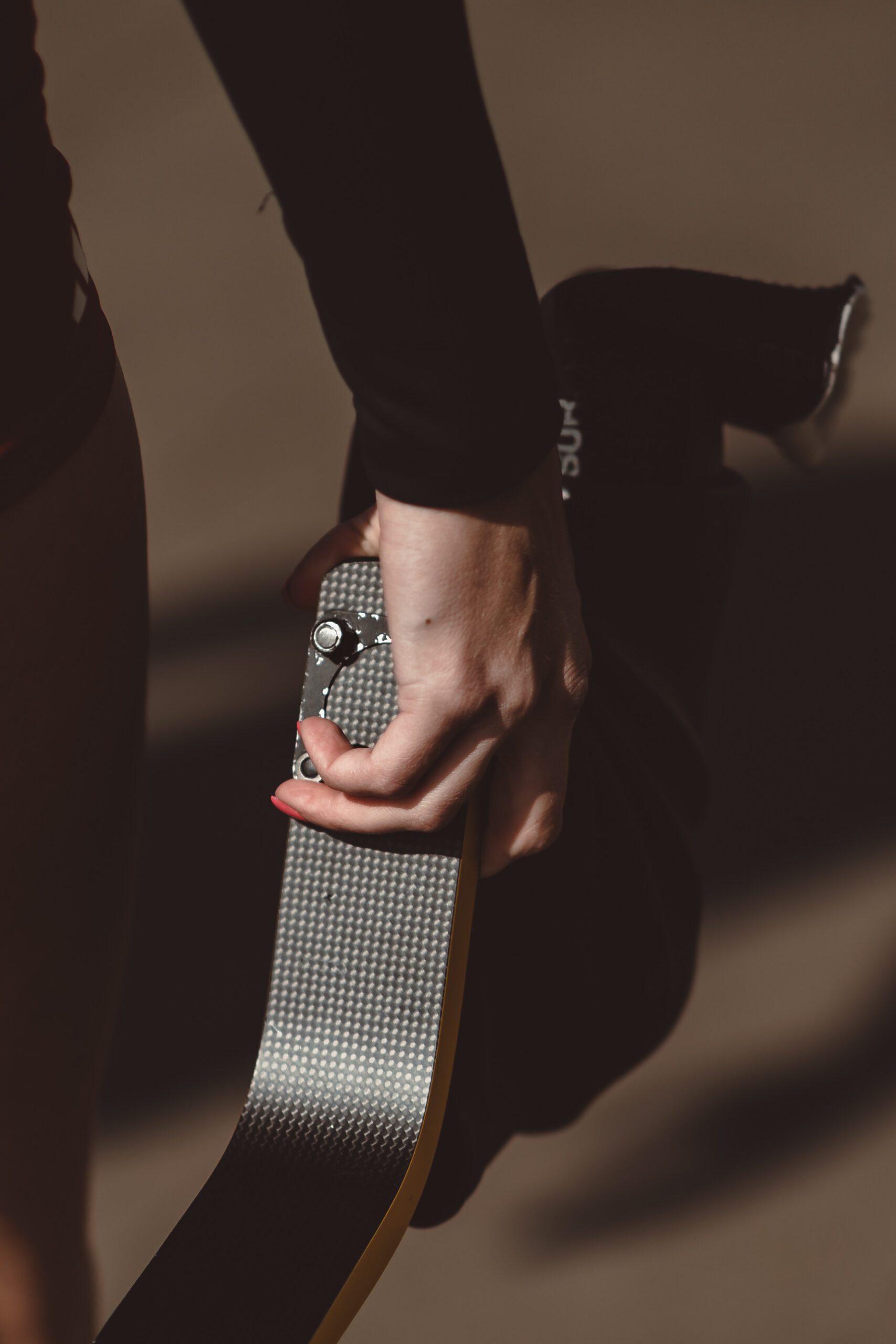
A below-knee prosthesis is not an accelerator. The connection between body and blade determines almost everything: the socket must fit precisely, the alignment must be right and the stiffness of the blade must match your weight and speed. If something in that combination changes, your whole technique changes with it.
The hardest part is at the start. Coming out of the blocks and accelerating over the first metres costs the most in this class, because you cannot push off evenly. That is why the start matters more in the 100 metres than in the 200 metres, where you can make up those first metres over a longer distance.
T64 and my own career
I became Paralympic champion over 200 metres in the T64 class and I hold the world records in this class over 100 and 200 metres. I lost my left lower leg in a bus crash in France in 1998.
Frequently asked questions
What does the T in T64 stand for?
For Track, the track events. In field events such as long jump an F is used, for Field.
What is the difference between T62 and T64?
T62 is for athletes with a below-knee amputation of both legs, T64 for a below-knee amputation of one leg or a significant leg length difference.
Why do athletes from different classes race each other?
Because there are too few athletes per class for a full final. The classes are then combined, while records continue to count per class.
Does a blade give an advantage?
No. The prosthesis replaces a missing function and requires its own technique, especially at the start and in acceleration. Classification exists precisely to divide the remaining differences as fairly as possible.
Which class does Kimberly Alkemade compete in?
In T64, over 100 and 200 metres.